efficacy-desktop efficacy-mobile Kyleigh, Myalept patient,
is a paid spokesperson for Chiesi

Clinical Data Supporting Myalept

Myalept Reduced Fasting Triglycerides (TGs)

Myalept significantly reduced median fasting TG levels from 348 mg/dL at baseline to 164 mg/dL at Month 12 (n=36), and from 1527 mg/dL to 410 mg/dL in a subset of patients with baseline levels ≥500 mg/dL (n=12).1
Reduction of Fasting TGs1
Bar graph showing reduction in median fasting triglyceride levels from 348 mg/dL at baseline to 164 mg/dL at Month 12 in 36 patients
Reduction of Fasting TGs in Patients With Baseline Levels of ≥500 mg/dL1 
Bar graph showing reduction in median fasting triglycerides from 1527 mg/dL at baseline to 410 mg/dL at Month 12 in patients with baseline triglyceride levels ≥500 mg/dL (n=12)

Myalept Helped Patients Achieve Glycemic Control

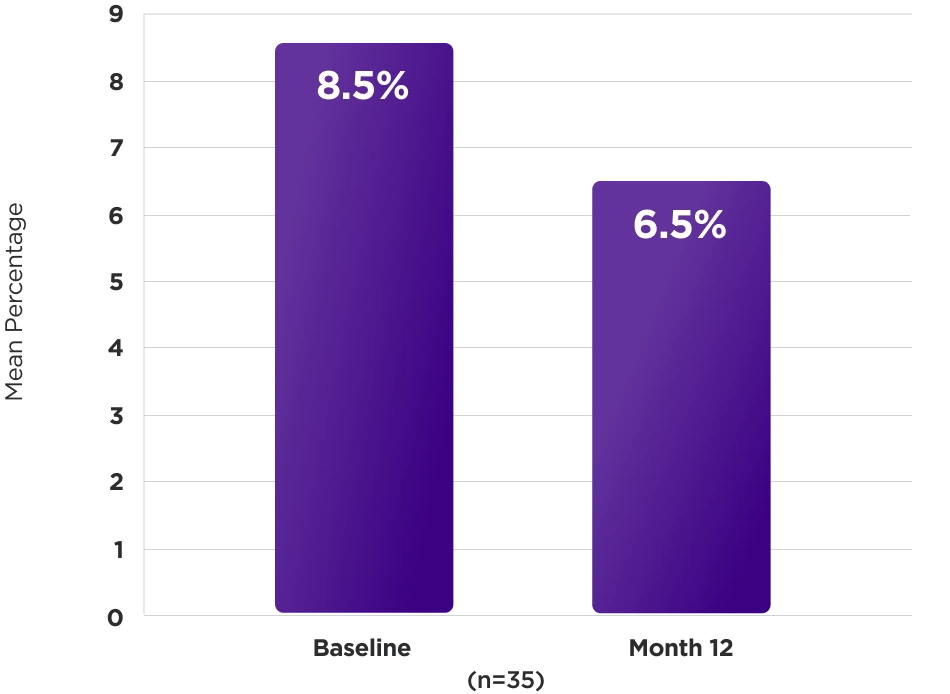
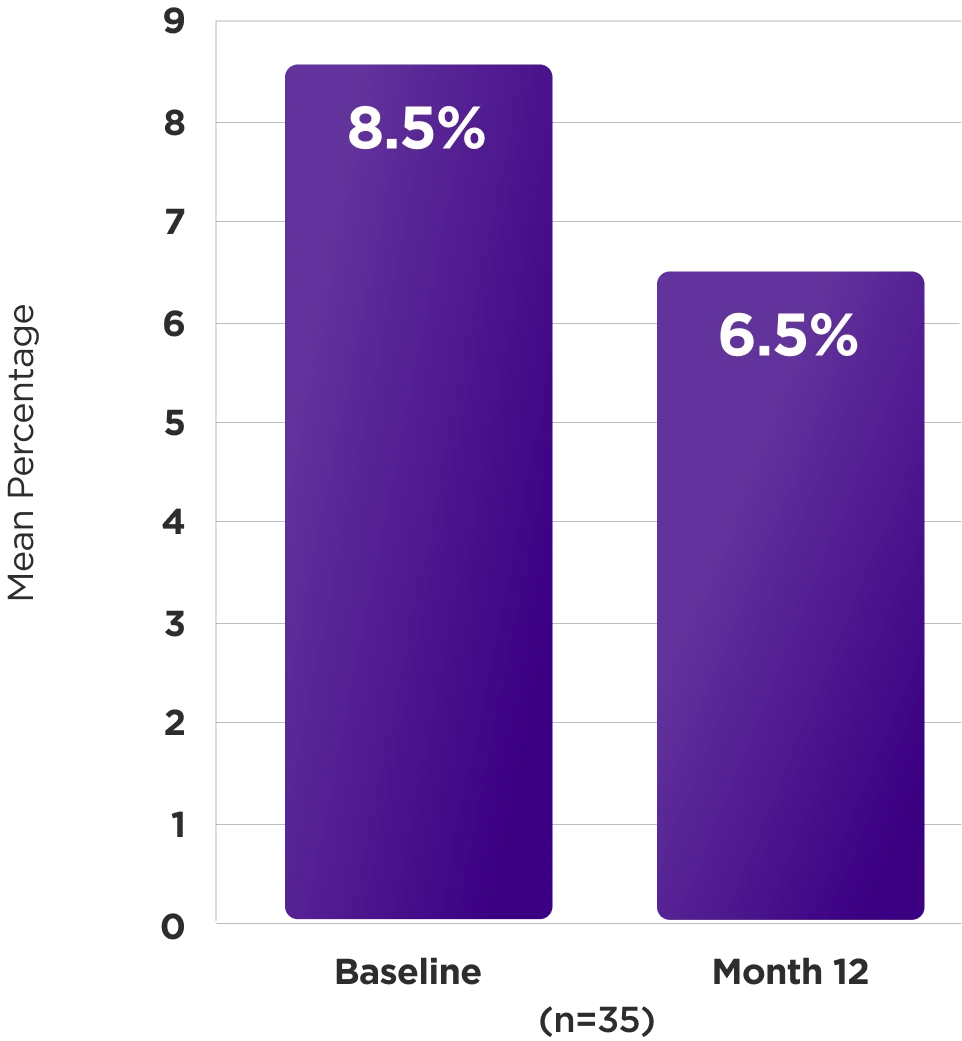
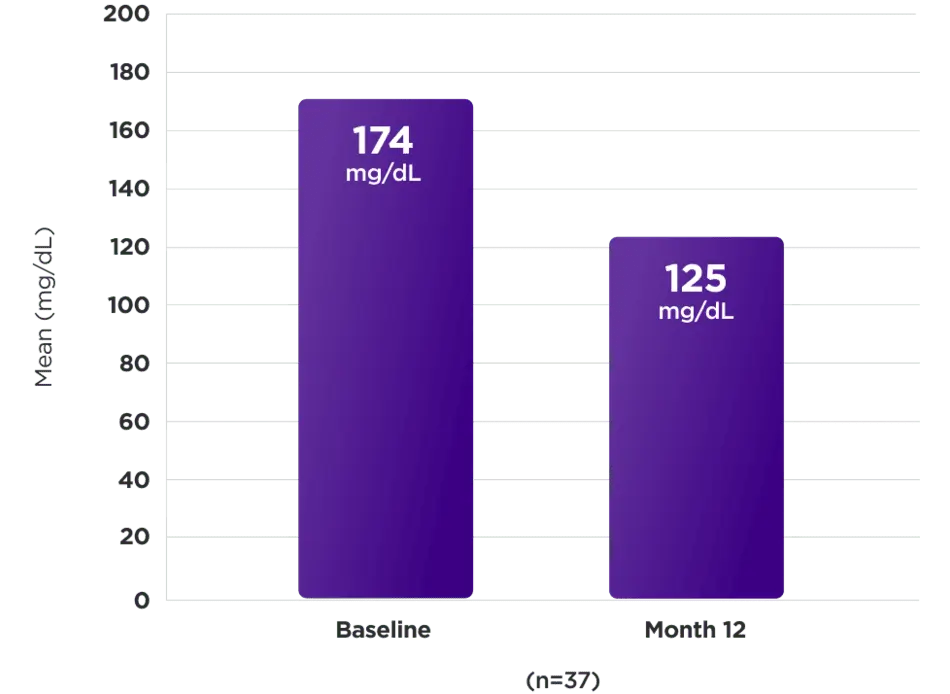
Myalept improved glycemic parameters, lowering mean HbA1c from 8.5% to 6.5% (n=35) and reducing fasting glucose from 174 mg/dL to 125 mg/dL at Month 12 (n=37). A mean HbA1c change of -2.4% was observed in patients with baseline HbA1c ≥7% (n=28).1
Reduction of HbA1c1
Bar graph showing reduction in HbA1c levels from 8.5% at baseline to 6.5% at Month 12 in 35 patients. Additional note: mean change of -2.4% for patients with HbA1c ≥7% at baseline
Reduction of Fasting Glucose1
Bar graph showing reduction in fasting glucose levels from 174 mg/dL at baseline to 125 mg/dL at Month 12 in 37 patients

Results seen as early as Month 4

The changes in HbA1c, fasting glucose, and TGs observed at Month 4 were similar to those at 1 year1

About the Myalept clinical study1

A phase 3, open-label, single-arm study evaluated Myalept treatment in 48 patients. Patients had to have congenital generalized lipodystrophy (CGL) or acquired generalized lipodystrophy (AGL) and diabetes mellitus, hypertriglyceridemia, and/or increased fasting insulin.
  • Of the 48 patients enrolled, 32 (67%) had CGL, 16 (33%) had AGL, 36 (75%) were female, 22 (46%) were Caucasian, 10 (21%) were Hispanic, and 9 (19%) were black
  • The median age at baseline was 15 years (range: 1–68 years), with 35 (73%) patients younger than 18 years of age
  • The median fasting leptin concentration at baseline was 0.7 ng/mL in males (range: 0.3–3.3 ng/mL) and 1.0 ng/mL in females (range: 0.3–3.3 ng/mL)
  • The median duration of Myalept treatment was 2.7 years (range: 3.6 months–10.9 years)

Myalept Reduced Fat With Sustained Efficacy

Final phase 3 data confirm Myalept’s safety & efficacy

Significant mean reductions from baseline at Month 122

  • −32.1% fasting TG (P=.001, n=57)
  • −2.2% HbA1c (P<.001, n=59)
  • −3.0 mmol/L fasting plasma glucose (P<.001, n=59)

Subset analysis: reductions sustained for all parameters over time2

Reductions in fasting TGs, HbA1c, and fasting plasma glucose were maintained through 48 months of Myalept treatment. These subanalyses show consistent, statistically significant improvements across all time points (P<.001).
Fasting TGs
Fasting TGs
Fasting TGs
HbA1c
HbA1c
HbA1c
Fasting Plasma Glucose
Mean (standard error) change from baseline in the full analysis set. Least-squares mean, standard error, and P values for the change from baseline parameters were computed using a mixed-effects model for repeated measures; P<.001 for the change from baseline for all time points.2

Myalept patients reached target reductions at month 122

icon2
80% of patients achieved ≥1% decrease in HbA1c or ≥30% decrease in TGs
icon1
38% of patients achieved the highest target of ≥2% reduction in HbA1c AND ≥40% reduction in TGs

Myalept Helped Some Patients Reduce Medication Use and Liver Volume

Of patients on medications2

Donut chart showing 41% of 39 patients discontinued insulin use
discontinued insulin
(n=16/39)
Donut chart showing 22% of 32 patients discontinued oral antidiabetic medications
discontinued oral antidiabetic medications
(n=7/32)
Donut chart showing 24% of 34 patients discontinued lipid-lowering medications
discontinued lipid-lowering medications
(n=8/34)

Significant Decreases in Liver Volume2

In a subset of patients with liver imaging data, the mean decrease in liver volume at Month 12 was 33.8% (P<.001, n=12).

The safety and effectiveness of Myalept for the treatment of liver disease, including nonalcoholic steatohepatitis (NASH), have not been established.

efficacy-hcp alt2

Real-World Data

Patients remained on Myalept for years*

desk mob

Some patients remained on therapy for 10+ years in the clinical trial

The median duration of exposure in the clinical trial was 2.7 years, with a range of 3.6 months to 10.9 years.
desk2 mob

Prescribing data reveal patients remain on Myalept for 3+ years on average

Long-term adherence suggests Myalept is well tolerated long-term.

Myalept is the only FDA-approved treatment indicated for GL1

*Mosaic Solutions Group [Data: January 2013-July 2020].

Myalept improved clinical and QoL outcomes

A retrospective study evaluated both clinical and humanistic consequences of GL and treatment. Chart data were abstracted from a cohort of Myalept-treated patients with GL (n=68) treated at the US National Institutes of Health (NIH).3

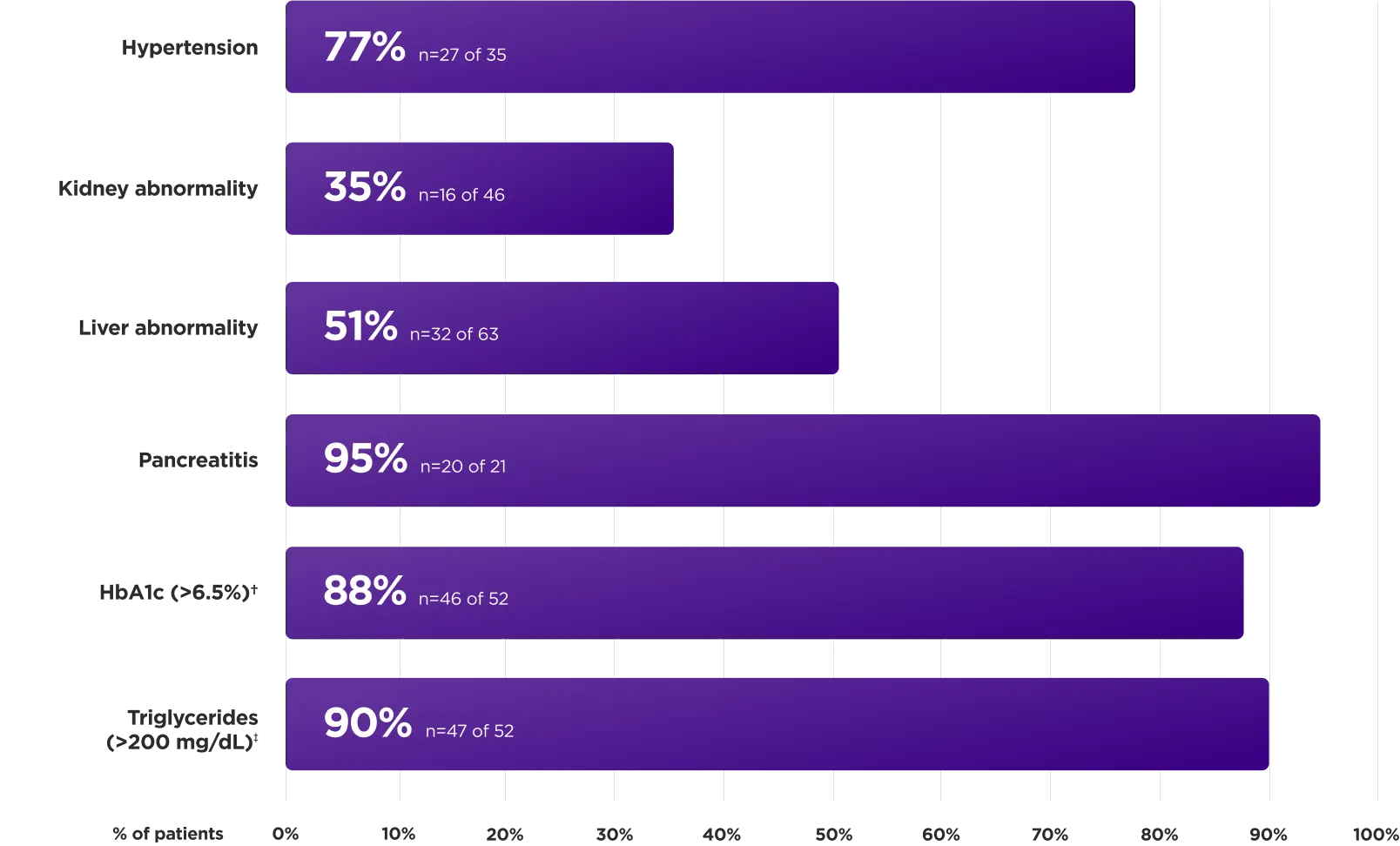
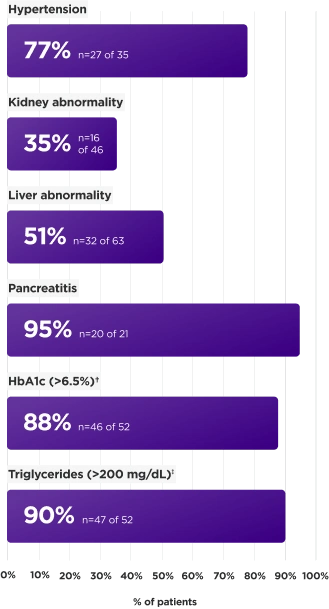
In the study, improvements were reported across both quality-of-life domains and metabolic complications. Patients experienced improvements in physical appearance (68%), work/school function (79%), and hyperphagia (100%). Clinically significant responses were also observed in hypertension (77%), HbA1c >6.5% to <8% (88%), and triglycerides >200 mg/dL to <500 mg/dL (90%), among other key metabolic parameters.3
Improvement of quality-of-life issues3
Bar graph showing improvements to quality-of-life issues while taking Myalept in clinical trial: 100% improvement in hyperphagia, 79% in ability to work or attend school, 68% in physical appearance perception, and 57% in female reproductive function
Improvement of metabolic complications3
Bar graph showing improvements with Myalept in metabolic complications: 90% in triglycerides (>200 mg/dL), 88% in HbA1c (>6.5%), 95% in pancreatitis, 51% in liver abnormality, 35% in kidney abnormality, and 77% in hypertension

 Figure adapted from Cook et al. 2021.

Percentages reported are of the 67 GL patients with available baseline HbA1c values. Improvement defined as ≥20% reduction in HbA1c % by Year 1.

Percentages reported are of the 66 GL patients with available baseline TG values. Improvement defined as ≥20% reduction in TGs by Year 1.

 HbA1c, hemoglobin A1c.

Myalept Is a Well-Tolerated Treatment1

See the Safety Data
References: 1. Myalept® (metreleptin) for injection for subcutaneous use [package insert]. Chiesi USA; 2024. 2. Brown RJ, Oral EA, Cochran E, et al. Long-term effectiveness and safety of metreleptin in the treatment of patients with generalized lipodystrophy. Endocrine. 2018; 60(3):479-489. 3. Cook K, Adamski K, Gomes A, et al. Effects of metreleptin on patient outcomes and quality of life in generalized and partial lipodystrophy. J Endocr Soc. 2021;5(4):1-16.

Important Safety Information

INDICATION: Myalept® (metreleptin) for injection is a leptin analog indicated as an adjunct to diet as replacement therapy to treat the complications of leptin deficiency in patients with congenital or acquired generalized lipodystrophy.

LIMITATIONS OF USE: The safety and effectiveness of Myalept for the treatment of complications of partial lipodystrophy or for the treatment of liver disease, including nonalcoholic steatohepatitis (NASH), have not been established.

Myalept is not indicated for use in patients with HIV-related lipodystrophy. Myalept is not indicated for use in patients with metabolic disease, including diabetes mellitus and hypertriglyceridemia, without concurrent evidence of generalized lipodystrophy.

WARNING: RISK OF ANTI-METRELEPTIN ANTIBODIES WITH NEUTRALIZING ACTIVITY AND RISK OF LYMPHOMA

Anti-metreleptin antibodies with neutralizing activity have been identified in patients treated with Myalept. The consequences of these neutralizing antibodies are not well characterized but could include inhibition of endogenous leptin action and/or loss of Myalept efficacy. Severe infection and/or worsening metabolic control have been reported. Test for anti-metreleptin antibodies with neutralizing activity in patients who develop severe infections or show signs suspicious for loss of Myalept efficacy during treatment. Contact Chiesi Farmaceutici S.p.A. at 1-866-216-1526 for neutralizing antibody testing of clinical samples.

T-cell lymphoma has been reported in patients with acquired generalized lipodystrophy, both treated and not treated with Myalept. Carefully consider the benefits and risks of treatment with Myalept in patients with significant hematologic abnormalities and/or acquired generalized lipodystrophy.

Because of these risks associated with the development of anti-metreleptin antibodies that neutralize endogenous leptin and/or Myalept and the risk for lymphoma, Myalept is available only through a restricted program under a Risk Evaluation and Mitigation Strategy (REMS) called the Myalept REMS PROGRAM.

CONTRAINDICATIONS: Myalept is contraindicated in general obesity not associated with congenital leptin deficiency. Myalept has not been shown to be effective in treating general obesity. The development of anti-metreleptin neutralizing antibodies have been reported in obese patients treated with Myalept. Myalept is contraindicated in patients with prior severe hypersensitivity reactions to metreleptin or to any of its components.

WARNINGS AND PRECAUTIONS: A dose adjustment, including possible large reductions, of insulin or insulin secretagogue may be necessary in some patients to minimize risk of hypoglycemia. Closely monitor blood glucose in patients on concomitant insulin, especially those on high doses, or insulin secretagogue.

Cases of progression of autoimmune hepatitis and membranoproliferative glomerulonephritis (associated with massive proteinuria and renal failure) were observed in some patients with acquired generalized lipodystrophy treated with Myalept. A causal relationship between Myalept and the development and/or progression of autoimmune disease has not been established. Carefully consider the benefits and risks of Myalept treatment in patients with autoimmune disease.

Hypersensitivity reactions (eg, anaphylaxis, urticaria or generalized rash) have been reported. Patient should promptly seek medical advice about discontinuation of Myalept if a hypersensitivity reaction occurs.

Myalept contains benzyl alcohol when reconstituted with Bacteriostatic Water for Injection. The preservative benzyl alcohol has been associated with serious adverse events and death in pediatric patients, particularly in neonates and premature infants. Preservative-free Water for Injection is recommended for use in neonates and infants.

ADVERSE REACTIONS: Most common adverse reactions (≥10%) in clinical trials were headache, hypoglycemia, decreased weight, and abdominal pain.

Please see Full Prescribing Information, including Boxed Warning.


Important Safety Information

INDICATION: Myalept® (metreleptin) for injection is a leptin analog indicated as an adjunct to diet as replacement therapy to treat the complications of leptin deficiency in patients with congenital or acquired generalized lipodystrophy.

LIMITATIONS OF USE: The safety and effectiveness of Myalept for the treatment of complications of partial lipodystrophy or for the treatment of liver disease, including nonalcoholic steatohepatitis (NASH), have not been established.

Myalept is not indicated for use in patients with HIV-related lipodystrophy. Myalept is not indicated for use in patients with metabolic disease, including diabetes mellitus and hypertriglyceridemia, without concurrent evidence of generalized lipodystrophy.

WARNING: RISK OF ANTI-METRELEPTIN ANTIBODIES WITH NEUTRALIZING ACTIVITY AND RISK OF LYMPHOMA

Anti-metreleptin antibodies with neutralizing activity have been identified in patients treated with Myalept. The consequences of these neutralizing antibodies are not well characterized but could include inhibition of endogenous leptin action and/or loss of Myalept efficacy. Severe infection and/or worsening metabolic control have been reported. Test for anti-metreleptin antibodies with neutralizing activity in patients who develop severe infections or show signs suspicious for loss of Myalept efficacy during treatment. Contact Chiesi Farmaceutici S.p.A. at 1-866-216-1526 for neutralizing antibody testing of clinical samples.

T-cell lymphoma has been reported in patients with acquired generalized lipodystrophy, both treated and not treated with Myalept. Carefully consider the benefits and risks of treatment with Myalept in patients with significant hematologic abnormalities and/or acquired generalized lipodystrophy.

Because of these risks associated with the development of anti-metreleptin antibodies that neutralize endogenous leptin and/or Myalept and the risk for lymphoma, Myalept is available only through a restricted program under a Risk Evaluation and Mitigation Strategy (REMS) called the Myalept REMS PROGRAM.

CONTRAINDICATIONS: Myalept is contraindicated in general obesity not associated with congenital leptin deficiency. Myalept has not been shown to be effective in treating general obesity. The development of anti-metreleptin neutralizing antibodies have been reported in obese patients treated with Myalept. Myalept is contraindicated in patients with prior severe hypersensitivity reactions to metreleptin or to any of its components.

WARNINGS AND PRECAUTIONS: A dose adjustment, including possible large reductions, of insulin or insulin secretagogue may be necessary in some patients to minimize risk of hypoglycemia. Closely monitor blood glucose in patients on concomitant insulin, especially those on high doses, or insulin secretagogue.

Cases of progression of autoimmune hepatitis and membranoproliferative glomerulonephritis (associated with massive proteinuria and renal failure) were observed in some patients with acquired generalized lipodystrophy treated with Myalept. A causal relationship between Myalept and the development and/or progression of autoimmune disease has not been established. Carefully consider the benefits and risks of Myalept treatment in patients with autoimmune disease.

Hypersensitivity reactions (eg, anaphylaxis, urticaria or generalized rash) have been reported. Patient should promptly seek medical advice about discontinuation of Myalept if a hypersensitivity reaction occurs.

Myalept contains benzyl alcohol when reconstituted with Bacteriostatic Water for Injection. The preservative benzyl alcohol has been associated with serious adverse events and death in pediatric patients, particularly in neonates and premature infants. Preservative-free Water for Injection is recommended for use in neonates and infants.

ADVERSE REACTIONS: Most common adverse reactions (≥10%) in clinical trials were headache, hypoglycemia, decreased weight, and abdominal pain.

Please see Full Prescribing Information, including Boxed Warning.